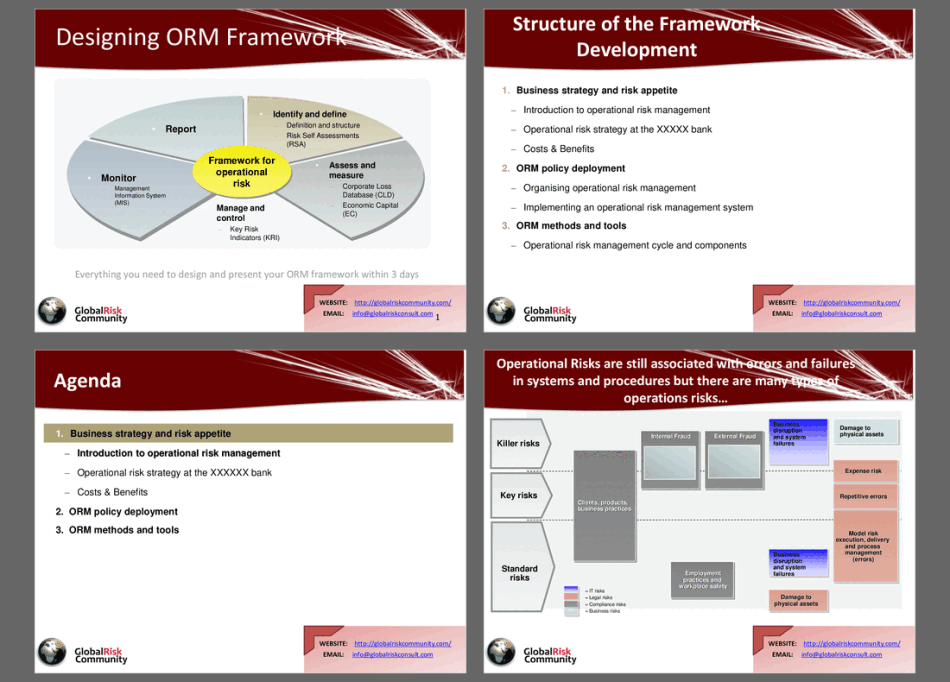

Designing Operational Risk Management (ORM) Framework   48-slide PPT PowerPoint presentation slide deck (PPT)
$59.00

Designing Operational Risk Management (ORM) Framework (48-slide PPT PowerPoint presentation slide deck (PPT)) Preview Image
Log in to unlock full preview.
Designing Operational Risk Management (ORM) Framework (48-slide PPT PowerPoint presentation slide deck (PPT)) Preview Image
Arrow   Click main image to view in full screen.

Designing Operational Risk Management (ORM) Framework (PowerPoint PPT Slide Deck)

PowerPoint (PPT) + Word (DOCX) 48 Slides

Top 1,000 Best Practice $59.00
Based on work with Citibank, Bank of Tokyo Mitsubishi, and Capgemini, this deck is developed by a Global Risk Leader and founder of the world's largest Risk Management community. SOX, ITIL, FFIEC, BS25999, ISO 17799/27001 compliant.
Add to Cart


Immediate download
Fully editable PowerPoint
Free lifetime updates

BENEFITS OF THIS POWERPOINT DOCUMENT

  1. You will be able to design and complete your own ORM framework within 3 days. Just copy and paste your data.

RISK MANAGEMENT PPT DESCRIPTION

Editor Summary 48-slide PowerPoint with supplemental DOCX titled "Designing Operational Risk Management (ORM) Framework" provides a bank-focused ORM playbook developed by a Global Risk Leader with experience at Citibank, Bank of Tokyo Mitsubishi, and Capgemini. Read more

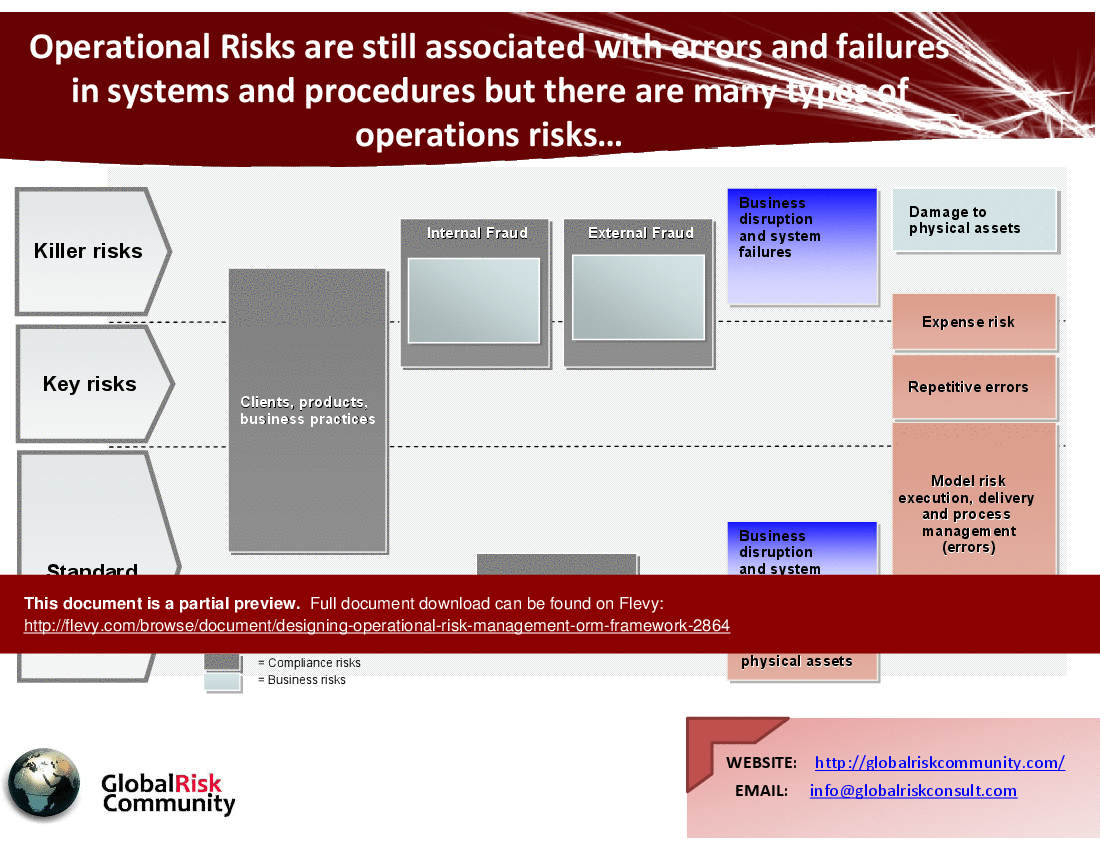
Operational Risk is the risk of loss resulting from inadequate or failed internal processes, people, and systems or from external events. Operational Risk Management (ORM) is the management function of identifying, analyzing, and responding to these operational risks. ORM involves the systematic assessment of potential operational risks, the implementation of controls to mitigate or eliminate those risks, and the continuous monitoring of the effectiveness of those controls.

ORM is an important part of overall Risk Management and helps organizations to identify, evaluate, and prioritize risks in order to make informed decisions about how to allocate resources and implement controls to manage those risks. ORM is applicable to a wide range of organizations and industries, including financial services, healthcare, manufacturing, and government agencies.

The presentation will show you how to design the Operational Risk Management (ORM) framework, so that you will be able to prepare and present:

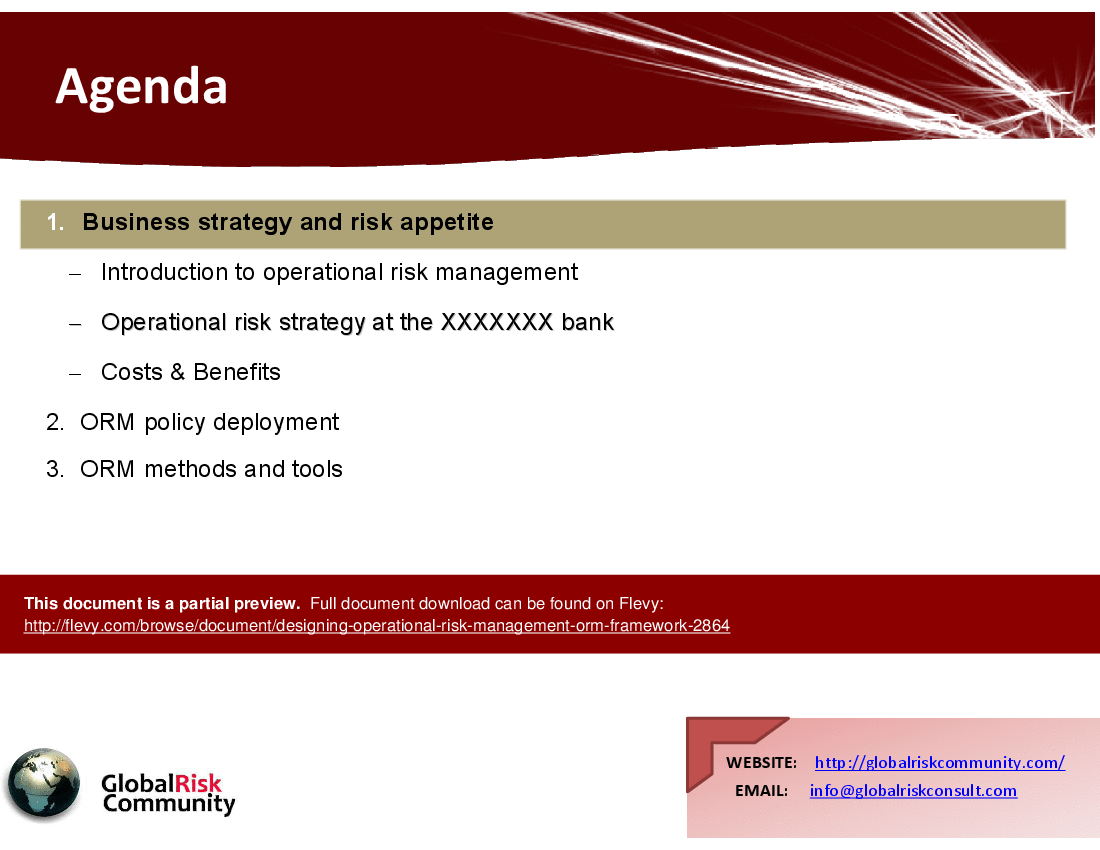
•  Business strategy and risk appetite
•  ORM policy deployment and implementation approaches
•  ORM methods and tools
•  and more

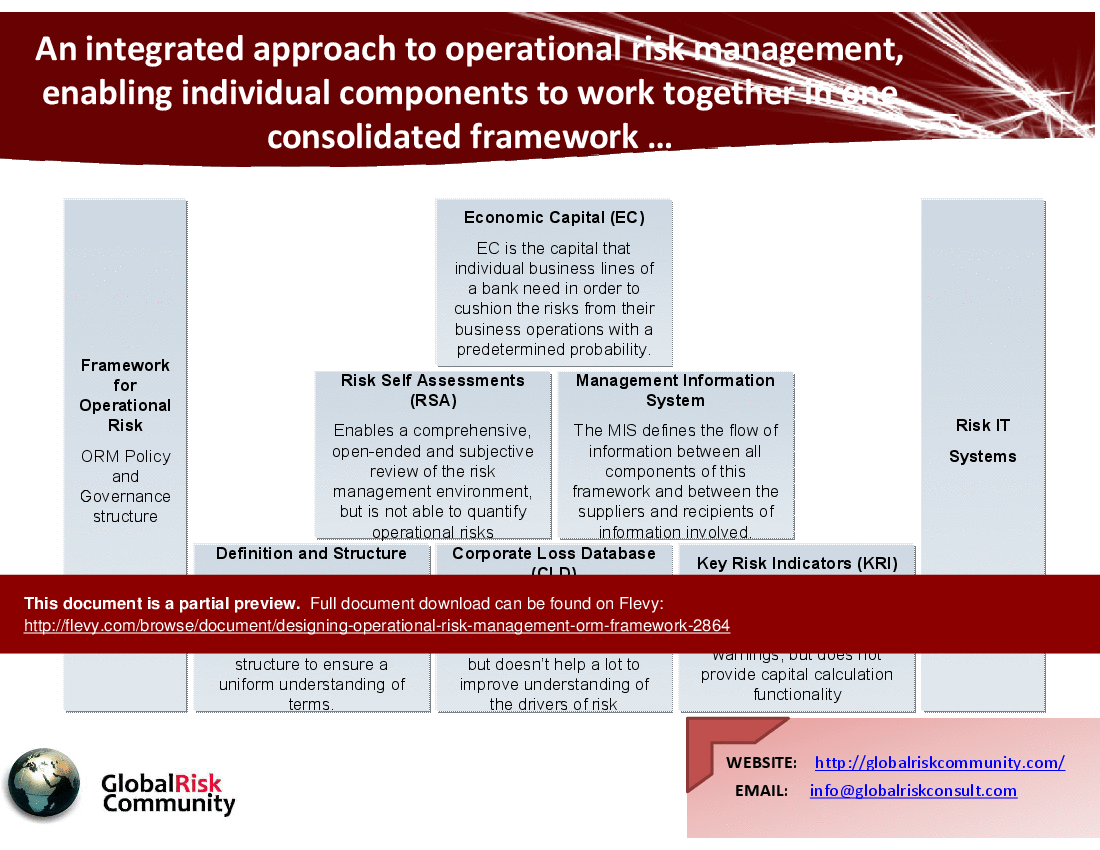
Specific topics covered include structural differences between risk types, Basel II requirements, corporate governance, COSO's ERM framework, continuous ORM cycle, critical success factors, Corporate Loss Database (CLD), key risk indicators, among other topics.

This also includes an accompanying Risk Glossary

This PPT also delves into the practical aspects of implementing an ORM framework, including detailed project planning and dynamic training modules. It outlines the critical steps for policy development, data loss collection, and the establishment of a Corporate Loss Database (CLD). The presentation emphasizes the importance of continuous assessment and measurement of risks, and the necessity of a robust Management Information System (MIS) for effective risk communication. This resource is indispensable for executives aiming to enhance their organization's risk resilience and ensure compliance with regulatory standards.

Got a question about the product? Email us at support@flevy.com or ask the author directly by using the "Ask the Author a Question" form. If you cannot view the preview above this document description, go here to view the large preview instead.

MARCUS OVERVIEW

This synopsis was written by Marcus [?] based on the analysis of the full 48-slide presentation.


Executive Summary
This presentation titled "Designing Operational Risk Management (ORM) Framework" offers a comprehensive guide for organizations, particularly banks, to establish and implement an effective ORM framework. Developed by a Global Risk Leader with experience from Citibank, Bank of Tokyo Mitsubishi, and Capgemini, this deck provides actionable insights into ORM policy deployment, risk assessment, and management strategies. The framework aligns with regulatory standards such as SOX, ITIL, and ISO 27001, ensuring compliance while enhancing operational resilience. By utilizing this presentation, organizations can effectively monitor, report, and manage operational risks, ultimately leading to improved decision-making and risk mitigation.

Who This Is For and When to Use
•  Risk Management Executives overseeing ORM initiatives
•  Compliance Officers ensuring adherence to regulatory standards
•  Operational Risk Analysts conducting risk assessments
•  Business Continuity Planners developing contingency strategies
•  IT Managers responsible for risk-related technology implementations

Best-fit moments to use this deck:
•  During the initial stages of ORM framework development
•  When assessing and measuring operational risks within the organization
•  For training sessions aimed at enhancing ORM awareness among staff
•  In workshops focused on implementing ORM policies and tools

Learning Objectives
•  Define operational risk and its implications for the organization
•  Build a comprehensive ORM framework tailored to specific business needs
•  Establish governance structures for effective ORM policy deployment
•  Identify and assess key operational risks using structured methodologies
•  Implement Key Risk Indicators (KRIs) for proactive risk management
•  Develop a Corporate Loss Database (CLD) for tracking historical losses
•  Integrate Economic Capital (EC) considerations into risk management practices
•  Foster a culture of ORM awareness and continuous improvement

Table of Contents
•  Introduction to Operational Risk Management (page 3)
•  Governance of Operational Risk (page 5)
•  ORM Policy Deployment (page 8)
•  ORM Methods and Tools (page 12)
•  Risk Self Assessments (RSA) (page 15)
•  Corporate Loss Database (CLD) (page 18)
•  Key Risk Indicators (KRI) (page 22)
•  Economic Capital (EC) (page 25)
•  Implementation Steps (page 28)
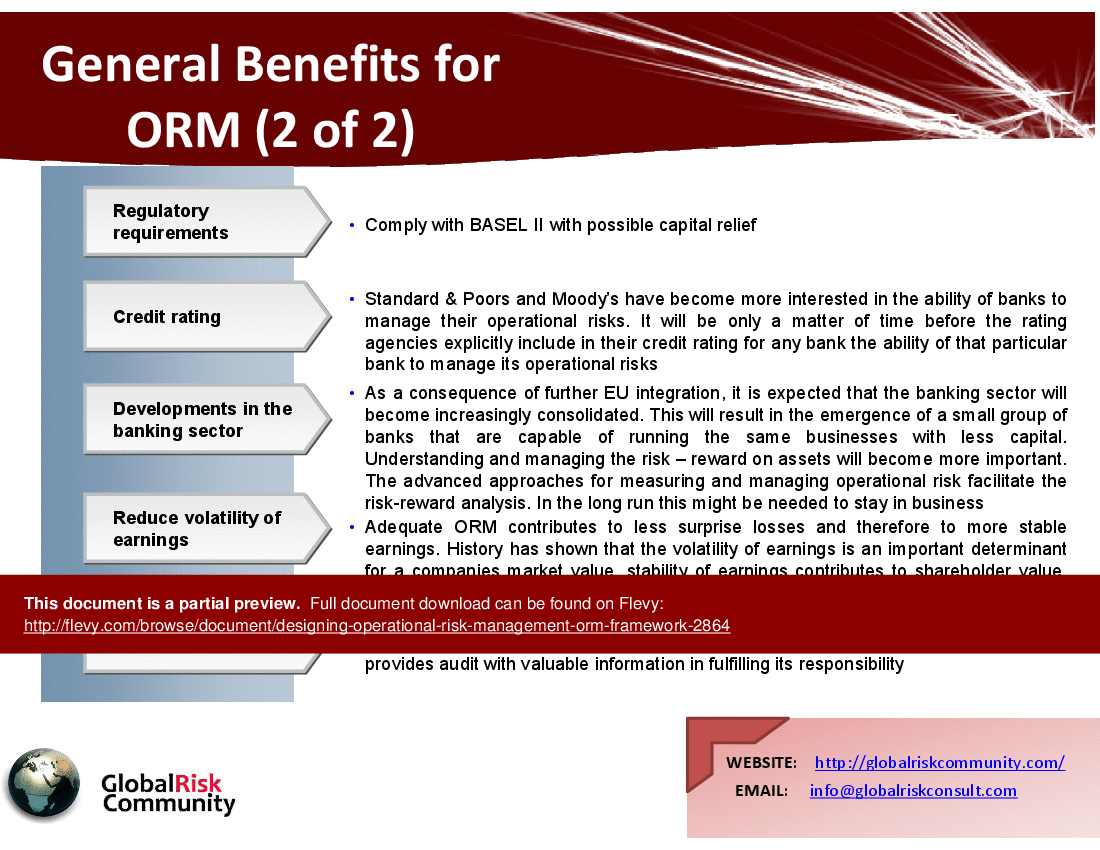
•  Benefits of ORM for Banks (page 30)

Primary Topics Covered
•  Operational Risk Definition - Operational risk encompasses the risk of loss resulting from inadequate or failed internal processes, people, systems, or external events.
•  Governance Structure - Establishing a governance framework is essential for effective ORM, ensuring accountability and oversight across the organization.
•  ORM Policy Deployment - Strategies for organizing and implementing ORM policies to align with business objectives and regulatory requirements.
•  Risk Self Assessments (RSA) - A structured approach to evaluating operational risks through qualitative assessments and workshops.
•  Corporate Loss Database (CLD) - A systematic collection of internal operational losses to inform risk management decisions and strategies.
•  Key Risk Indicators (KRI) - Metrics that provide early warnings about potential risks, enabling proactive management and control.
•  Economic Capital (EC) - The capital required to cushion risks from business operations, calculated based on predetermined probabilities.
•  Implementation Steps - A detailed roadmap for setting up the ORM framework, including project planning and stakeholder engagement.

Deliverables, Templates, and Tools
•  ORM policy template for consistent documentation and communication
•  Risk assessment framework for identifying and evaluating operational risks
•  Corporate Loss Database (CLD) setup guide for tracking historical losses
•  Key Risk Indicator (KRI) development toolkit for monitoring risk exposure
•  Economic Capital (EC) calculation model for assessing capital requirements
•  ORM awareness training materials for staff engagement and education

Slide Highlights
•  Overview of operational risk types and their implications for organizations
•  Governance structure slide detailing roles and responsibilities in ORM
•  KRI examples showcasing effective metrics for risk monitoring
•  Implementation roadmap outlining key steps for ORM framework setup
•  Benefits of ORM for banks, emphasizing regulatory compliance and risk reduction

Potential Workshop Agenda
ORM Framework Development Workshop (3 hours)
•  Introduction to operational risk and its significance
•  Group discussion on current ORM practices and challenges
•  Hands-on session for developing a Corporate Loss Database

KRI Implementation Session (2 hours)
•  Overview of Key Risk Indicators and their importance
•  Interactive exercise to identify relevant KRIs for the organization
•  Action planning for KRI monitoring and reporting

Customization Guidance
•  Tailor the ORM policy template to reflect organizational terminology and structure
•  Adjust the risk assessment framework to align with specific business processes
•  Incorporate company-specific data into the Corporate Loss Database setup
•  Define thresholds and reporting processes for Key Risk Indicators based on organizational needs

Secondary Topics Covered
•  Risk appetite and its impact on ORM strategy
•  Integration of ORM with corporate governance practices
•  Challenges in operational risk management and mitigation strategies
•  Regulatory requirements influencing ORM frameworks

Topic FAQ

What are the typical phases of designing an operational risk management framework?

Designing an ORM framework typically follows staged topics: introduction and governance, policy deployment, methods and tools, Risk Self Assessments (RSA), Corporate Loss Database (CLD), Key Risk Indicators (KRI), Economic Capital (EC), and implementation steps, ending with monitoring and benefits assessment under an implementation roadmap.

How should I structure a Corporate Loss Database (CLD) to inform risk decisions?

A CLD should systematically capture internal loss events with consistent taxonomy, severity, and root cause fields to enable trend analysis and reporting; the presentation includes a CLD setup guide and examples for populating and using a Corporate Loss Database (CLD).

Which Key Risk Indicator (KRI) characteristics make them useful for early warning?

Useful KRIs are measurable, tied to key processes, have defined thresholds, and feed into reporting systems so they trigger escalation; the deck provides a KRI development toolkit and KRI examples for monitoring exposure and thresholds.

What should a Risk Self Assessment (RSA) process include to be effective?

An RSA process should combine document review, interviews, and facilitated workshops to identify and rate process‑level risks, capture control effectiveness, and prioritize actions; the toolkit outlines an RSA approach using qualitative assessments and workshop facilitation.

How do I evaluate the value of an ORM template set before purchase?

Evaluate templates by coverage of governance, RSA, CLD, KRI, and Economic Capital elements, availability of implementation steps and customization guidance, and whether compliance mappings (e.g., SOX, ISO) are included; look for deliverables such as an ORM policy template and CLD setup guide.

What implementation timeline and training effort should I expect using a packaged ORM presentation?

Packaged resources support short workshops (examples include a 3‑hour ORM framework workshop and a 2‑hour KRI session) and provide project planning steps for broader rollout; use the included workshop agendas and implementation roadmap to plan time and training.

I need to meet Basel II and COSO ERM expectations—what must be included in my ORM design?

Include a governance structure, documented ORM policy, RSA capability, loss data collection via a CLD, KRI monitoring, and Economic Capital assessment to quantify exposures; the presentation explicitly references Basel II and COSO ERM topics such as Economic Capital (EC).

How can I align ORM policy deployment with IT and continuity controls?

Align policy by mapping ORM requirements to IT controls, embedding KRIs in operational monitoring, and using CLD insights to inform continuity priorities; the deck contains guidance on ORM policy deployment, KRI implementation, and MIS requirements for reporting.

Document FAQ
These are questions addressed within this presentation.

What is operational risk?
Operational risk is the risk of loss resulting from inadequate or failed internal processes, people, systems, or from external events.

How can we implement an ORM framework?
Implementing an ORM framework involves defining policies, conducting risk assessments, establishing a Corporate Loss Database, and setting up Key Risk Indicators.

What are Key Risk Indicators (KRIs)?
KRIs are metrics that provide early warnings about potential risks, enabling organizations to take proactive measures to mitigate those risks.

Why is a Corporate Loss Database (CLD) important?
A CLD captures historical operational losses, providing valuable insights for risk assessment and management decisions.

How does Economic Capital (EC) relate to ORM?
EC represents the capital needed to cushion risks from business operations, helping organizations manage their financial exposure effectively.

What steps are involved in conducting Risk Self Assessments (RSA)?
RSAs involve qualitative assessments through document analysis, interviews, and workshops to evaluate operational risks across the organization.

How can we ensure compliance with regulatory requirements?
Aligning the ORM framework with regulatory standards such as SOX, ITIL, and ISO 27001 ensures compliance and enhances operational resilience.

What are the benefits of implementing an ORM framework?
Benefits include improved risk management, regulatory compliance, enhanced decision-making, and increased investor trust.

Glossary
•  Operational Risk - The risk of loss resulting from inadequate or failed internal processes, people, systems, or external events.
•  Key Risk Indicator (KRI) - A metric that provides early warnings about potential risks.
•  Corporate Loss Database (CLD) - A systematic collection of internal operational losses.
•  Economic Capital (EC) - The capital required to cushion risks from business operations.
•  Risk Self Assessment (RSA) - A structured approach to evaluating operational risks.
•  Governance Structure - The framework that defines roles and responsibilities in ORM.
•  ORM Policy - A documented strategy for managing operational risks.
•  Risk Appetite - The level of risk an organization is willing to accept in pursuit of its objectives.
•  Regulatory Compliance - Adherence to laws, regulations, and guidelines governing operational risk management.
•  Risk Management Cycle - The continuous process of identifying, assessing, managing, and monitoring risks.
•  Management Information System (MIS) - A system for managing and reporting information related to operational risks.
•  Loss Event - An occurrence that results in a financial loss due to operational risk.
•  Risk Mitigation - Strategies and actions taken to reduce the impact of identified risks.
•  Stakeholder Engagement - Involving relevant parties in the ORM process to ensure alignment and support.
•  Continuous Improvement - Ongoing efforts to enhance ORM practices and frameworks.
•  Operational Risk Framework - A structured approach to managing operational risks within an organization.
•  Cultural Change - Shifts in organizational behavior and attitudes towards risk management.
•  Implementation Plan - A detailed roadmap for executing the ORM framework.
•  Training and Awareness - Programs designed to educate staff about ORM practices and responsibilities.
•  Performance Measurement - Assessing the effectiveness of ORM initiatives and strategies.

Source: Best Practices in Risk Management, Operational Risk PowerPoint Slides: Designing Operational Risk Management (ORM) Framework PowerPoint (PPT) Presentation Slide Deck, Boris Agranovich


$59.00
Based on work with Citibank, Bank of Tokyo Mitsubishi, and Capgemini, this deck is developed by a Global Risk Leader and founder of the world's largest Risk Management community. SOX, ITIL, FFIEC, BS25999, ISO 17799/27001 compliant.
Add to Cart
  

ABOUT THE AUTHOR

Additional documents from author: 14

Founder at Global Risk community helping clients master risks and opportunities, adviser, Building Bridges Globally.

Entrepreneurial business leader with 25+ years of global experience in Financial Services, IT and Consulting. Worked in West & East Europe, Middle East, Asia Pacific. Advised executive teams on effective risk management strategies.

Founder of the world's premier community for ... [read more]

Ask the Author a Question

You must be logged in to contact the author.

Click here to log in Click here register

Did you know?
The average daily rate of a McKinsey consultant is $6,625 (not including expenses). The average price of a Flevy document is $65.
Bundle and save! You can save up to % with bundles!

View bundle(s)


Trusted by over 10,000+ Client Organizations
Since 2012, we have provided business templates to over 10,000 businesses and organizations of all sizes, from startups and small businesses to the Fortune 100, in over 130 countries.
AT&T GE Cisco Intel IBM Coke Dell Toyota HP Nike Samsung Microsoft Astrazeneca JP Morgan KPMG Walgreens Walmart 3M Kaiser Oracle SAP Google E&Y Volvo Bosch Merck Fedex Shell Amgen Eli Lilly Roche AIG Abbott Amazon PwC T-Mobile Broadcom Bayer Pearson Titleist ConEd Pfizer NTT Data Schwab


Read Customer Testimonials

 
"[Flevy] produces some great work that has been/continues to be of immense help not only to myself, but as I seek to provide professional services to my clients, it gives me a large "tool box" of resources that are critical to provide them with the quality of service and outcomes they are expecting."

– Royston Knowles, Executive with 50+ Years of Board Level Experience
 
"As a niche strategic consulting firm, Flevy and FlevyPro frameworks and documents are an on-going reference to help us structure our findings and recommendations to our clients as well as improve their clarity, strength, and visual power. For us, it is an invaluable resource to increase our impact and value."

– David Coloma, Consulting Area Manager at Cynertia Consulting
 
"If you are looking for great resources to save time with your business presentations, Flevy is truly a value-added resource. Flevy has done all the work for you and we will continue to utilize Flevy as a source to extract up-to-date information and data for our virtual and onsite presentations!"

– Debbi Saffo, President at The NiKhar Group
 
"As a consulting firm, we had been creating subject matter training materials for our people and found the excellent materials on Flevy, which saved us 100's of hours of re-creating what already exists on the Flevy materials we purchased."

– Michael Evans, Managing Director at Newport LLC
 
"Flevy is now a part of my business routine. I visit Flevy at least 3 times each month.

Flevy has become my preferred learning source, because what it provides is practical, current, and useful in this era where the business world is being rewritten.

In today's environment where there are so "

– Omar Hernán Montes Parra, CEO at Quantum SFE
 
"I like your product. I'm frequently designing PowerPoint presentations for my company and your product has given me so many great ideas on the use of charts, layouts, tools, and frameworks. I really think the templates are a valuable asset to the job."

– Roberto Fuentes Martinez, Senior Executive Director at Technology Transformation Advisory
 
"I have found Flevy to be an amazing resource and library of useful presentations for lean sigma, change management and so many other topics. This has reduced the time I need to spend on preparing for my performance consultation. The library is easily accessible and updates are regularly provided. A wealth of great information."

– Cynthia Howard RN, PhD, Executive Coach at Ei Leadership
 
"I have used FlevyPro for several business applications. It is a great complement to working with expensive consultants. The quality and effectiveness of the tools are of the highest standards."

– Moritz Bernhoerster, Global Sourcing Director at Fortune 500


Save with Bundles

This document is available as part of the following discounted bundle(s):


Customers Also Bought These Documents


Customers Also Like These Documents

Explore Templates on Related Management Topics


Your Recently Viewed Documents
Receive our FREE presentation on Operational Excellence

This 50-slide presentation provides a high-level introduction to the 4 Building Blocks of Operational Excellence. Achieving OpEx requires the implementation of a Business Execution System that integrates these 4 building blocks.